

Case Study: Taliban

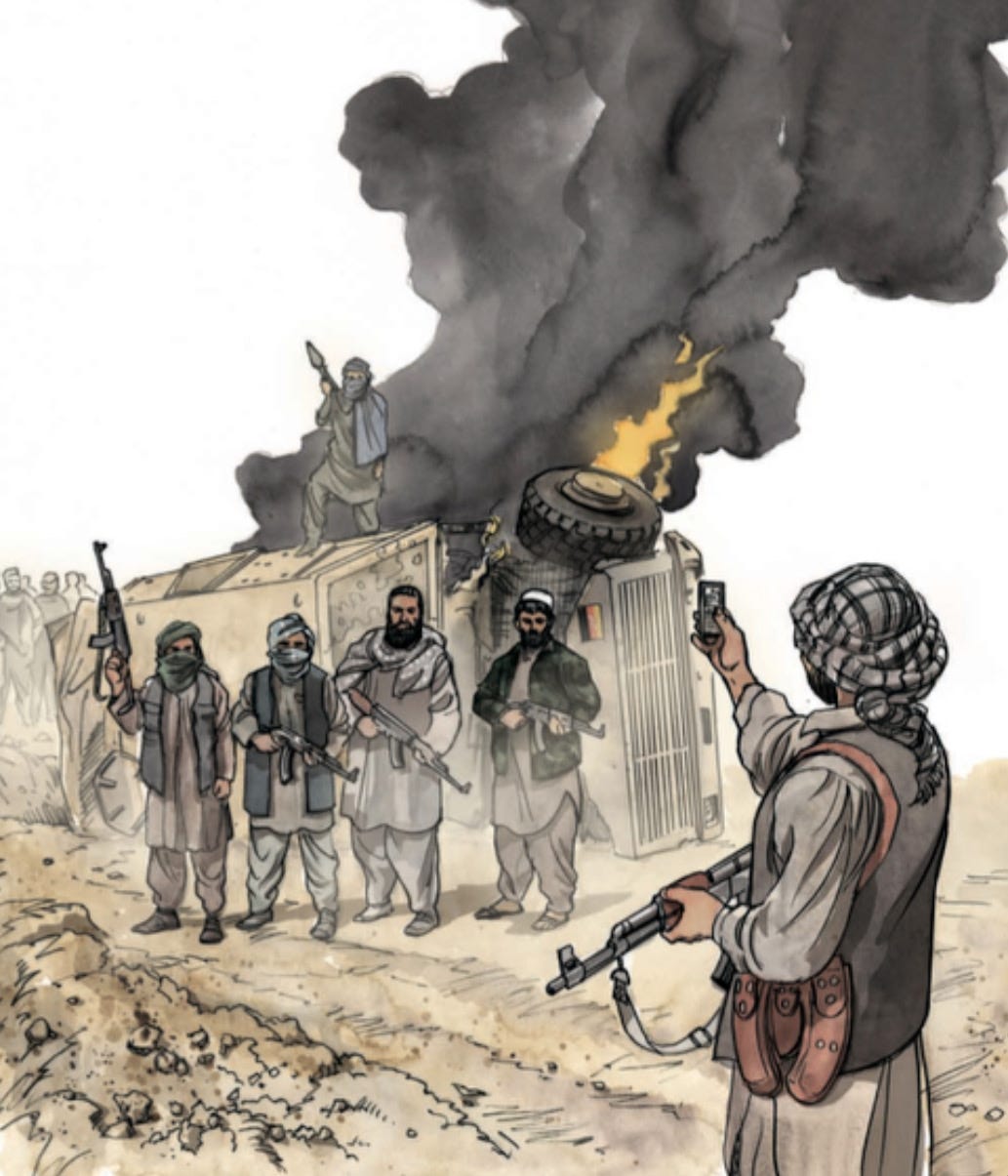
“I hide in my cave like Osama did.” -Drake
In my spare time, I am a huge fan of random Islamic conflicts. The sort of religious fanaticism that inspires Jihad is entirely alien to the West & what's left of Christianity, the closest thing is anti-abortion radicals going after a Planned Parenthood clinic every now & then. Whether it's the Mujahideen alliance that brought the Red Army to it’s knees, foreign radicals crossing the world to get domed by Marines in Ramadi, Chechen fighters participating in 5 different wars over the course of 10 years, all of it. It's fascinating to look into.
Perhaps none of these conflicts are as intriguing as the war in Afghanistan, which raged on in some form or another from 1978 to 2022 & left both of the world's only two superpowers with a bloody nose. The war is broken up into six phases: 1) Mujahideen battles against the Soviet backed government. 2) Mujahideen battles against the no longer Soviet backed government. 3) Mujahideen battles amongst themselves. 4) Mujahideen battles against the Taliban. 5) Taliban battles against the US backed government. 6) Taliban battles against the no longer US backed government.
Muslims have more drama than a sorority house.
What this article will specifically focus on is the peculiar rise of the Taliban against seemingly all odds. I have written before that individuals with moderate politics very rarely fight, whether you look at any given civil war or the International Legion of Ukraine. You’ll find a lot of Nazis, Marxists, Jihadis, etc. It's very rare to find ideologically moderate militant groups, even if they're otherwise engaged with the conflict or have something to benefit. Perhaps it's not moderacy, but just Liberalism & its adjacent ideological followers.
Regardless, what's also notable is that it's often the most extreme groups that end up gaining the upper hand. The Islamic State was far more vicious than Al-Qaeda or any other militant group in the region, yet was by far the most successful of the entire GWOT. The original Bolsheviks were the most radical of the leftist factions in the Russian Civil War, we all know how that ended. Similarly, the Taliban was the most radical militant group in Afghanistan (an impressive feat) & rapidly destroyed many very well established & experienced Mujahid groups. They literally banned music.
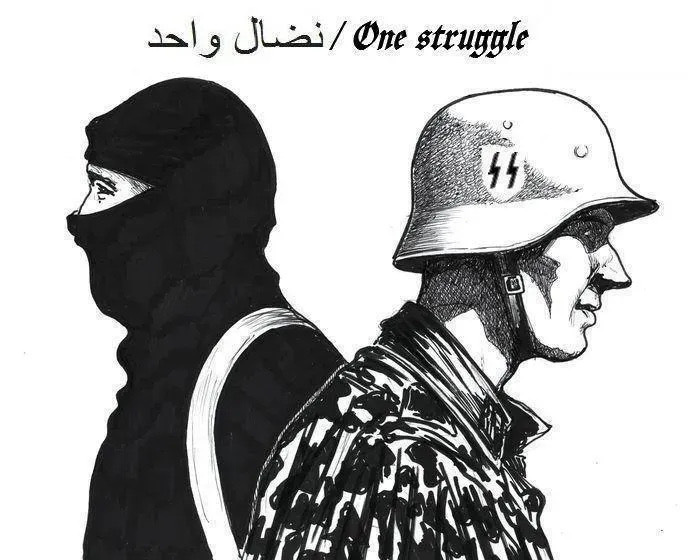
Naturally, it should be obvious what similarities we have with the Taliban. If the old guard Mujahideen can be considered analogous to moderate armed groups in the US, such as Oath Keepers or Threepers, then the Taliban is Atomwaffen Division et al. I won't bore you with the intricacies of Islamic religious doctrine & political philosophy, this is purely about the actual rise to power.
To set the stage, after the Soviets pulled out in 1989 the united Mujahideen continued fighting to destroy the communist Republic of Afghanistan. This conflict did not last long, & various (though not all, or even the most powerful) factions joined together to form the Islamic State of Afghanistan (no relation to Daesh). This new government was immediately thrown into chaos as various factions involved with it started vying for control, specifically control over Kabul which allows for power projection across the countryside. At the same time, factions beyond the government simply ignored it & held total power in their tribal territories. This conflict of Mujahideen warlords vying for power would remain the status quo from 1992 to 1994.
In Kandahar, a region considered to be stateless & on the fringe even by the standards of Afghanistan, there was a large & time honored tradition of Madrases. These are traditional Islamic schools that can be seen as roughly analogous to the Christian institutions that create clergymen. The members of these schools were referred to as Taliban, which is Pashto for student. Given the timing, many students were Mujahideen veterans who fought the Marxists a few years prior but had since stayed out of the ongoing conflict. The dominant faction in the region were the fighters of Gulbuddin Hekmatyar.
Hekmatyar is a well known name in the intelligence community, both because he was the most heavily funded Mujahideen commander of the Soviet-Afghan war & because he is one of the biggest diplomatic embarrassments the US has faced (an impressive feat). Despite nominally being an Islamic radical, he began cultivating poppy farms to be used for heroin production. Later on, he also began producing his own heroin & acting as a middleman for heroin produced around the Golden Triangle. In Kandahar, his men had a strenuous grasp on the situation. His criminal companions were often causing problems, including wanton violence against local civilians. He is today a member of the Taliban’s “reconciliation council,” meaning he was forced at gun point to publicly support the new Taliban government. Another major warlord, an illustrious hero of the war against communism, was Mullah Naqib. Although he remained an important anti-Taliban commander until his death in 2007 (which directly led to the Taliban immediately gaining full control of the area), his men were not as poorly regarded but still engaged in conflict with other armed groups.
All of these various militant & criminal organizations led to an extremely unsafe environment. Random gunfights left children dead in the crossfire, widespread looting & rapes occurred. Not only did this motivate the creation of the Taliban, it gave them an easy propaganda victory to gain support from the local population.
The major leaders of the first generation Taliban (which had less than 50 fighters) included Mohammed Omar, Mohammad Ghous, Hasan Akhund, and Mohammad Rabbani. All of these were of the Durrani tribal confederation & knew each other from both the madrasas & their time fighting the communists. Contrary to other factions in the war, the Taliban portrayed themselves as bringers of peace. Their stated goal was to destroy criminal organizations & bring law & order. After a period of conducting vigilante violence against local criminal groups, they quickly became popular in Kandahar & her neighboring regions. Many local businessmen & tribal leaders pledged their support. Pashto legends tell of a specific instance where local militia fighters raped & murdered several girls & boys of a family traveling to Kandahar - news of which directly sparked the creation of the Taliban as a militant group. Other legends tell of Taliban fighters wiping out bandit gangs along the major roads (yes, there's literal raider gangs in this region even today).
In the coming years, the Taliban would attract nearly 20,000 fighters from the local Durrani tribes & madrasas’ across both Afghanistan & Pakistan. They enjoyed widespread support from the local population across Afghanistan, with the exception of some northern tribes who felt they were Pashto supremacists & the followers of existing warlords.
For the first few months, most of the fighting was simply engaging local bandits & traffickers. Fighting was not common against the much more powerful Mujahideen groups in the area.
This changed in October of ‘94, when several thousand Taliban fighters marched on Kandahar City. They seized control of the city & shortly after the entire province, only taking a few dozen casualties in the process. Mujahideen groups were pushed out of the province while criminal organizations were brutally cracked down on. This was very popular with the local populations, who cheered as Taliban fighters celebrated their victory & offered generous material support. For the first time since the 70’s, Kandahar was relatively safe & stable. Shortly thereafter, the Taliban would capture the border city of Spin Boldak. This would go one to be their primary base of operations & facilitate the movement of Pakistanis & Afghan refugees who joined the Taliban. It also allowed for direct support from Pakistani intelligence, who had a vested interest in stabilizing the situation in Afghanistan. By the end of 1994, the Taliban controlled all of Kandahar & most of the regions bordering it. They managed to commandeer a large amount of heavy equipment, including MiG-21 jets & Mi-17 helicopters. While a significant amount of small arms were donated by Pakistan, the vast majority were captured from bases formerly occupied by the Republic of Afghanistan & local warlords.
Over the course of 1995, the Taliban would come to control more than 1/3 of Afghanistan. Words of their deeds, & of the relative stability in their territory, spread across Afghanistan. Many Mujahideen warlords came to agree with Mullah Omar’s religious views (Islamic fundamentalism is the norm in Afghanistan anyway), not only did they not fight against the Taliban but many dedicated their forces to the Taliban. The same is true of local tribal militias. Those who stood against the Taliban were quickly & viciously destroyed. They were usually welcomed by the civilian population with praise. In early 1996, Mullah Omar held talks with various tribal & Mujahideen leaders which lead to the creation of the Islamic Emirate of Afghanistan.
In the autumn of ‘96, the Taliban launched a surprise attack on the city of Jalalabad. This was important because Jalalabad was the site of a major battle during the war against the communists. It was a key stronghold for the Republic, & two major Mujahideen groups failed to capture it after a very bloody two month long assault. The Taliban captured it within a week with minimal casualties, raising their flag over the local airport in front of a crowd of supporters. Their impressive victory made such an impact on the enemy that they simply abandoned Kabul, which had been the site of an omnisided battle causing close to 100k casualties over the preceding 4 years. The Taliban marched in without resistance, again to a crowd of supporters. Shortly after, the former president of Afghanistan, Najibullah, was assassinated while hiding at the city's United Nations compound. This killing was most likely done by Pakistani intelligence operatives, but the killing of his brother (a major general) & hanging their bodies from a streetlight in the city center was done by Taliban forces.
The only significant resistance left in Afghanistan were the Mujahideen groups who would eventually join together as the Northern Alliance. Contrary to most of Afghanistan, the Northern Alliance was mainly non-Pashto. The primary ethnic groups were Uzbek, Tajik & Hazara - all of which are long time ethnic enemies of the Pashto only barely held together by shared religious beliefs. The war against the Northern Alliance was a brutal race war. During Taliban advances in 1997, they suffered a severe defeat that led to roughly 3,000 fighters being killed. Many of these were massacred en masse, stories of particularly sadistic execution methods (thrown into wells, buried alive, etc.) were common. This enraged the Taliban, who immediately changed tactics towards an ethnic cleansing campaign. Many villages of hostile ethnic groups were massacred at once. I should point out that the only reason Pashto villagers didn't share the same fate is because the Northern Alliance did not control Pashto areas, otherwise they'd have done the same.
The Taliban would be successful in their race war, reaching the apogee of their power in 2000 before the US intervention following 9/11.
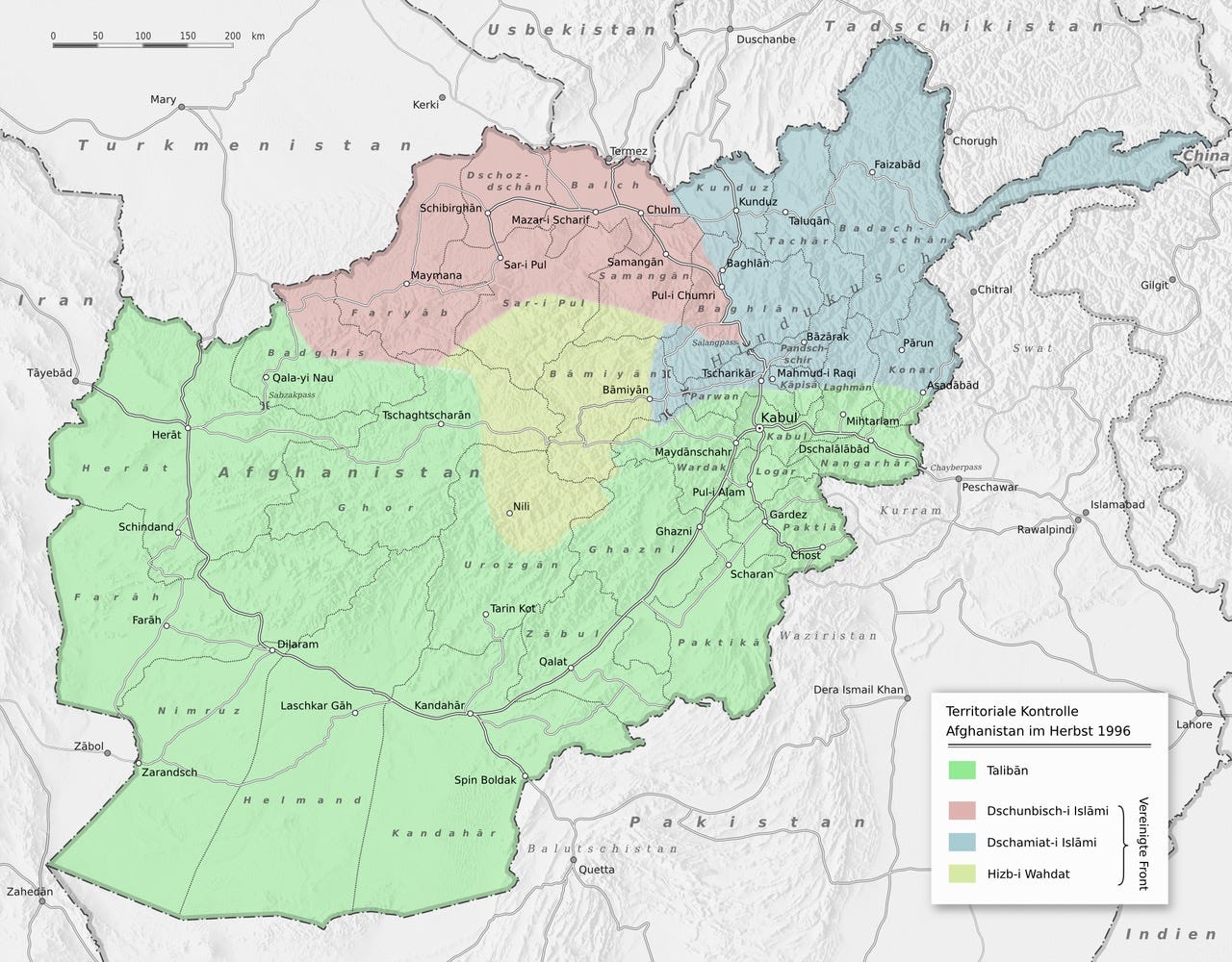
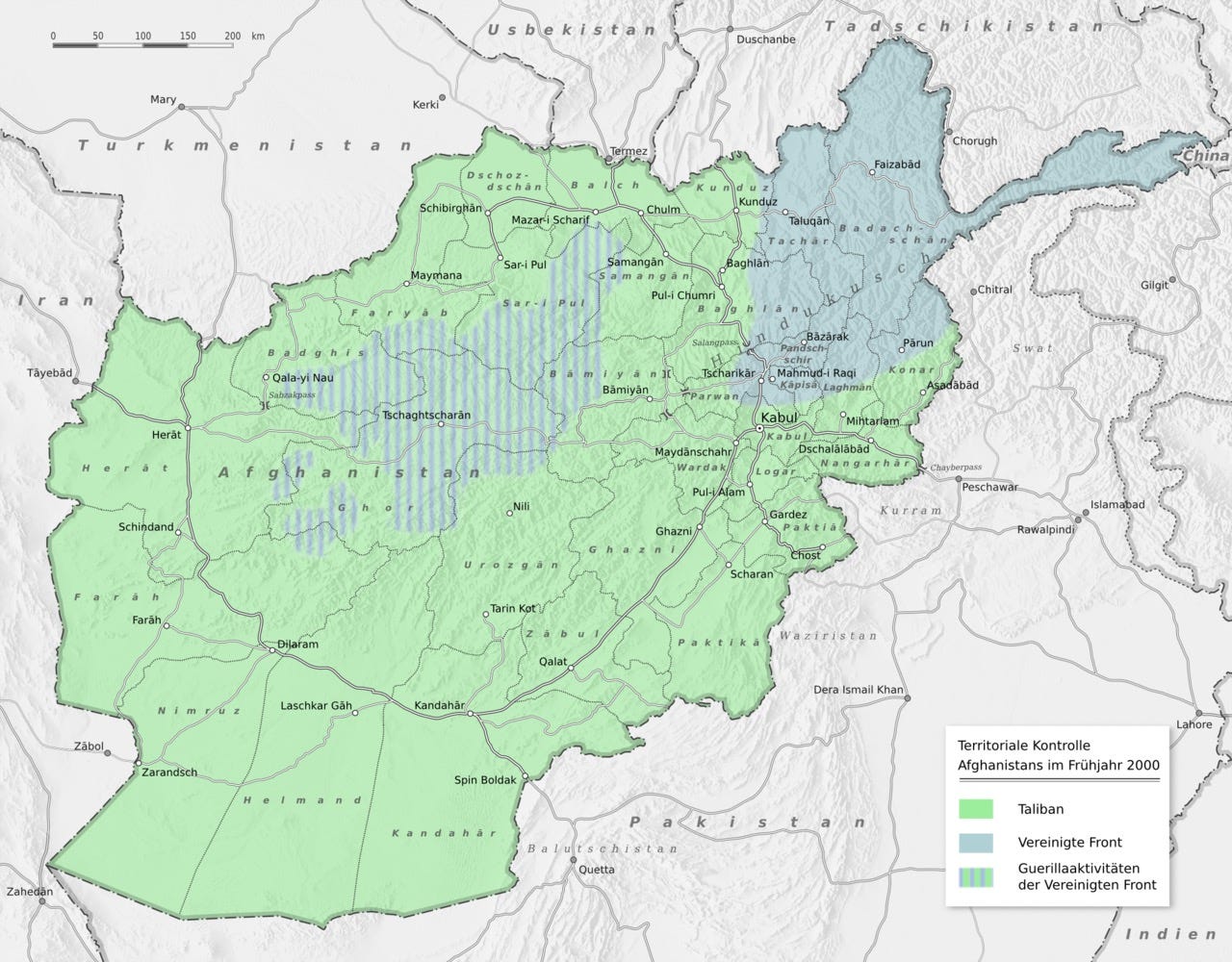
I will not cover the events of Operation Enduring Freedom. The Taliban refusing to hand over Bin Laden was a mistake that even they admit to, especially considering that Bin Laden lied to the Taliban by saying he would not use the country as a base for terrorism. Regardless, what's notable is that the Taliban managed to hold its own against the US Military & the Northern Alliance Afghan government for twenty years. They held true to their original beliefs & recaptured all of Afghanistan immediately following the US pullout, once more welcomed as heroes by cheering crowds. Afghanistan is once more relatively stable & the drug trafficking routes are once more closed.
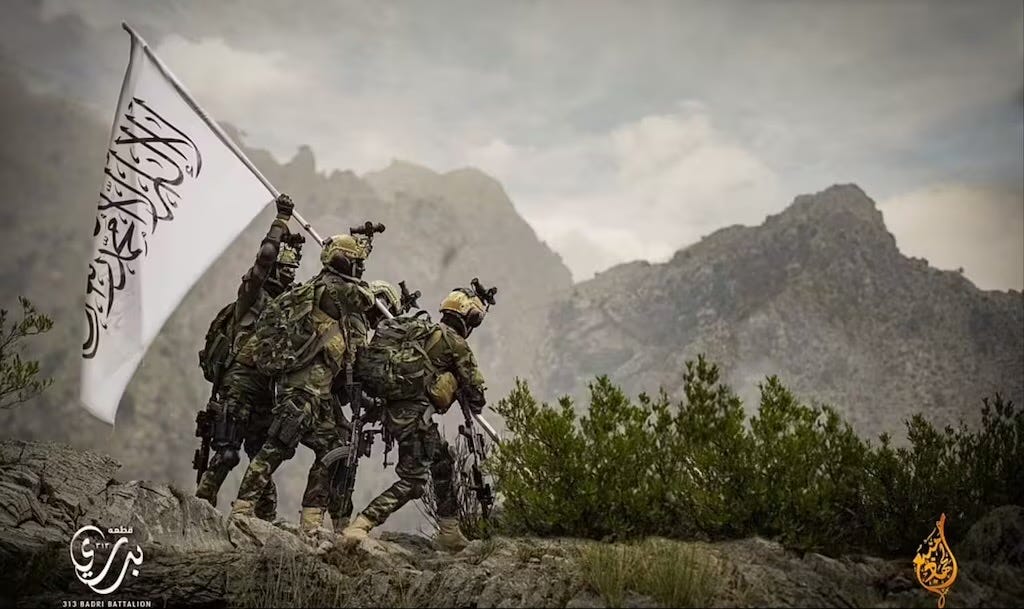
As for the analysis, we will look at two things. Firstly, the actual militant strategy used to eventually conquer all of Afghanistan despite humble beginnings, as well as sociological phenomena that the Taliban dealt with after 1996. Secondly, the strategy the Taliban used to garner goodwill both in their captured territory & as an actual government.
For this purpose, just change some words around. Instead of Afghanistan, let's say America. Instead of Kandahar, let's say Pacific Northwest. Instead of Taliban, let's say AWD. You get the idea. Obviously there's a mountain of cultural differences between Afghanistan & any Western country, but the major points still apply.
The Taliban’s initial reputation as vigilantes was very important to their support & success. By clearing roadways of bandits & killing violent gangs, they quickly earned the goodwill of the local populace. The extreme views of the Taliban were simply irrelevant to any random Afghan that had to live in constant fear of criminal organizations. This also positioned the Taliban as the most “moral” faction, in terms of Islamic law anyway. They were practically the only organization who felt the need to go after drug traffickers, rapists, thieves, etc. while other militant groups focused purely on killing each other.
Wherever the Taliban took control, they brought order to chaos. It was fairly safe for anyone to go about their life. The only real fear the average Afghan had was being whacked with a stick for not wearing a burqa properly or having a beard too short, both of which are already highly looked down upon in Afghan society anyway. Many people probably know of the practice of bacha bazi, which are underage boys used as sex slaves. What you probably don't know is that the practice is not an “Afghan” or even Muslim thing. It was mainly practiced by non-Pashto tribes in the north. Meaning, the Northern Alliance which later became the Afghan government. The practice was specifically cited by Mullah Omar as a deciding factor in his formation of the Taliban, as he was just as disgusted by it as the Western soldiers that came to discover the practice. It has carried a death penalty under Taliban law since their initial formation. I’m sure it's starting to become clear how the Taliban have been so popular for the last 30 years.
In many respects, the foundation of the Taliban mirrors Nathan Forrest’s foundation of the Ku Klux Klan, who saved so many from the Blacks & carpetbaggers during the horrors of the Reconstruction Era.
This same strategy, which gave them success as a revolutionary organization, also gave them success as a government (twice). As I said, the Taliban are absolute extremists. Even by the standards of Afghan society &/or Islamic fundamentalism. Here's a brief list of things banned by the Taliban:
Pork, pig, pig oil, anything made from human hair, satellite dishes, cinematography, equipment that produces the joy of music, pool tables, chess, masks, alcohol, tapes, computers, VCRs, television, anything that propagates sex and is full of music, wine, lobster, nail polish, firecrackers, statues, sewing catalogs, pictures, Christmas cards, shaving of beards, keeping of pigeons, flying kites, displaying of pictures or portraits, western hairstyles, music and dancing at weddings, gambling, "sorcery", and not praying at prayer times.
Crimes that carried a death sentence were done publicly in the town square/city center.
Yeah, not too fucking jolly.
As I said, the Taliban are extreme. Regardless of their extremism, they are still widely supported because the good they do more than makes up for the inconveniences of the strictest interpretation of Sharia on the planet. I’m sure I don't need to bring up how this applies to us, whether as National Socialists or more vaguely “far-right.” Contrary to the beliefs of the more liberally minded, the populace will accept basically any edict we pass as long we make sure they are safe, well fed, secure & remain polite. This means addressing the problems our subjects face & maintaining strict professionalism in our interactions with them. Considering our enemies are well known for committing sadistic actions against civilians (both Leftists & the government), this isn't very hard to achieve.
This doesn't mean we can be too soft, however. A major reason the US (& it's Afghan vassal government) failed is because there was no was no consequences for supporting the Taliban or other Anti-Coalition Militias. They simply handed out food & built wells, which the locals were happy to have but political loyalty can't be easily bought. Similarly, we have countless examples of overzealous militant groups (especially of the Marxist variety) who will harshly regulate the population without doing anything to garner support. The Taliban walked a perfect middle ground, they provided all of the aforementioned positives but also made sure the locals knew who was in charge by immediately enforcing their laws & relentlessly killing their opposition. They struck a balance by killing rapists & brigands, as well as stringing up the former president in Kabul’s center. We can do the same by killing corrupt officials, drug dealers, etc. while handing out food & supplies to local Whites, for example.
On their tactics, the 1994 Battle of Kandahar City is an excellent example of tactical restraint. They could have taken the city months prior, however it would have been a much more difficult task that would have lasted much longer & caused much more bloodshed. By waiting until they could easily sweep through & seize control, they made themselves seem very powerful. This is why the other Mujahideen factions quickly pulled out of Kandahar, after the shock of a completely unknown force suddenly seizing a major city. Once they made their strength known, they also did well with diplomacy - convincing many other Mujahideen groups to join their cause. A similar situation could occur between our hypothetical AWD & other RW groups.
“When people see a strong horse and a weak horse, by nature they will like the strong horse.” -Osama Bin Laden
Finally, it cannot be ignored that the Taliban suddenly hit a wall in the north. After taking 2/3 of Afghanistan in 2 years, they spent 5 years trying to take the last 1/3. This is because what was essentially a political/religious campaign very quickly turned into a race war (& a total war) between a Pashto Taliban & non-Pashto Northern Alliance. None of the Northern Alliance was ever going to join the Taliban like the other Mujahideen groups, nor were any Tajiks or Uzbeks going to cheer for advancing Taliban forces. No amount of Islamic piousness or “national unity” was going to change that. Give it enough time (or look deep enough) & every conflict is an ethnic conflict.
Not only will we face the same roadblock when advancing on majority non-White areas, we will also likely see similar levels of brutality. Even the World Wars among Europeans eventually lead to ethnic cleansing & sadistic brutality on both sides. Much like the brutal executions & mass killings in northern Afghanistan, places like Texas or Mississippi will inevitably resemble the later chapters of The Turner Diaries.
Case studies like these are important, much like my previous case study on the Euromaidan Revolution. This is what real conflict looks like, beyond moralizing feel-good stories. Once you pick out the things that are exclusive to Afghanistan, there's a lot to learn from both that entire conflict & the Taliban specifically. Probably more than any other conflict I’ve studied, vice maybe Syria. Examples that are often mentioned, namely Mussolini’s March on Rome & the Spanish Civil War, are poor representation because we are nowhere near the position of Mussolini or Franco today. Trump & his fellow travelers maybe. Our position is far more similar to the Taliban in 1994 or Bolsheviks in 1915.
Tribe & train.
Hail Victory.
afghans are not exactly the brightest people but they’re quite a tough people- at least the ones in afghanistan
“It's very rare to find ideologically moderate militant groups, even if they're otherwise engaged with the conflict or have something to benefit. Perhaps it's not moderacy, but just Liberalism & its adjacent ideological followers.”
I feel like it’s like this with religions, too. Basically all religions ascribe beliefs, tenets, and practices that seem counterintuitive to basic reality. That is to say, all religions are “cults” if they’re small enough. It’s just that if a religion is big, most people won’t observe those beliefs and practices.
When Christianity was young, it had people doing insane stuff like tearing down idols, fasting in the desert for years, preaching to people who will obviously martyr them, or living on top of pillars to spend the rest of one’s life in prayer. But after millennia of being the mainstream religion, for most people it’s just the “be, like, vaguely nice to people, and God will let you into heaven because He’s also vaguely nice to people” religion. And as Christianity’s mainstream influence declines, you start to see the rise of weird, austere variants of Christianity again.
Scientology seems like an insane religion, and it is, but if it was a huge mainstream thing it would seem very normal because most of its followers wouldn’t actually practice everything the religion preaches. All the weird stuff would just be weird extra stuff for the dedicated nutcases. Or if paganism was mainstream with billions of followers, it wouldn’t be as closely associated with vvignasty vvitalists or crunchy granola big bear homos.
Islam is kind of the exception and maybe I just disproved my own thesis here, but even still it gets watered down in homogenous or overly accommodating environments, and you end up with a lot of lax Muslims. The extremism really comes out when it’s placed under siege, like in Afghanistan, or when it’s brought into constant, chafing proximity with other cultures, like in modern Europe.